
Leveraging Blockchain Technology to Improve Transparency and Resilience in the Humanitarian Sector - Chapter 4 - Findings and Discussion


This chapter presents and critically discusses the empirical findings of the study, structured around the four analytical mechanisms established in Chapter 2: information coordination, inter-agency trust, adoption trajectories, and user-level system use. Following the methodology set out in Chapter 3, thematic analysis combined deductive and inductive coding to ensure theoretical integration and coherence (Braun and Clarke, 2006, 2019; Fereday and Muir-Cochrane, 2006; Creswell and Poth, 2018; Miles, Huberman and Saldaña, 2014). Insights are drawn from three cases — WFP's Building Blocks, UNICEF's CryptoFund, and IFRC's Digital Identity pilot — selected for operational maturity and organisational diversity to enable robust cross-case analysis (Patton, 2015; Flyvbjerg, 2006; Dubey et al., 2020).
Analysis began with familiarisation and first-order descriptive coding (Corbin and Strauss, 2015; Flick, 2018), followed by second-order coding aligned with the four theoretical frameworks — OIPT, RV, DOI, and UTAUT — to maintain analytical consistency (Miles, Huberman and Saldaña, 2014; Yin, 2018; Saunders et al., 2019). Iterative cross-validation reinforced reliability and interpretive clarity (Lincoln and Guba, 1985; Maxwell, 2012; Patton, 2015; Bryman, 2016). Table 8 summarises how the analytical mechanisms align with the research questions and cases.
Thematic Area | Analytical Mechanism | Core Focus | Research Question(s) | Illustrative Case(s) |
Information Coordination in Humanitarian Operations | Information Coordination | How blockchain supports data visibility, timeliness, and cross-agency coordination | RQ1, RQ2, RQ3 | WFP (interviews + docs), IFRC (documents) |
Trust, Control, and Inter-agency Collaboration | Interagency Trust | How blockchain influences trust-building, transparency, and shared control among partners | RQ1, RQ2 | UNICEF (docs), WFP (interviews), IFRC (comparative lens) |
Diffusion of Blockchain Innovations | Adoption Trajectories | Patterns, barriers, and drivers of blockchain adoption across organisations | RQ1, RQ2, RQ3, RQ4 | All three cases (comparative across documents + survey) |
User Acceptance and Operational Integration | User-level System Use | Usability, behavioural intention, and institutional support for blockchain adoption in the field | RQ1, RQ4 | WFP (interviews), IFRC (docs), Survey (user-perception lens) |
Table 8 - Mapping of Theoretical Frameworks to Thematic Areas, Research Questions, and Case Studies
Information Coordination and Transparency
The findings show that decentralised, verifiable information access strengthens operational coordination in fragmented humanitarian contexts. Blockchain emerged as a key enabler, addressing coordination barriers by reducing duplication, improving timeliness, and distributing decision-making.
Field respondents repeatedly highlighted information gaps as a core operational challenge:
"In a crisis, our biggest enemy is the information gap between agencies. We often don't know what others have delivered or who still needs what, until weeks later." — WFP Field Operations Officer, Jordan, 2024 Interview
Survey data reinforced this, with 74% citing poor information-sharing as a major barrier, due to fragmented data silos and a lack of shared platforms (Moshtari, 2016; Van Wassenhove, 2006; Altay and Pal, 2014).
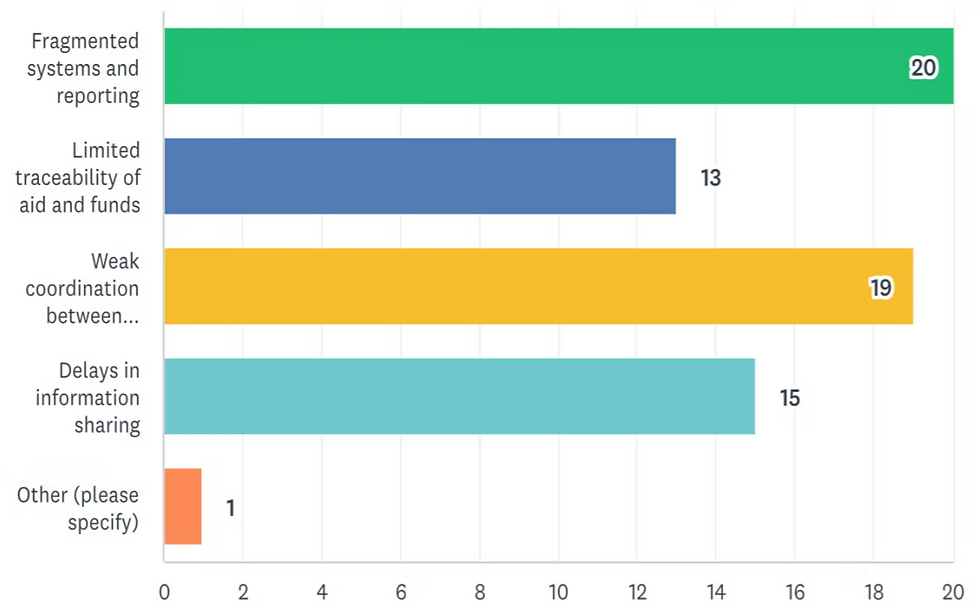
Figure 5 - Challenges to Achieving Transparency in Humanitarian Operations
These results align with Organisational Information Processing Theory (OIPT), which argues that organisations in high-uncertainty environments must increase information-processing capacity (Galbraith, 1973; Tushman and Nadler, 1978). Prior research has shown that slow information flow undermines inter-agency coherence (Dubey et al., 2020; Moshtari and Gonçalves, 2017; Balcik et al., 2010).
In practice, blockchain-based platforms like WFP's Building Blocks improved coordination by providing near-real-time transactional visibility, reducing manual reconciliation:
"Before, we relied on weekly coordination meetings and Excel sheets. With Building Blocks, our staff and partners could see transactions almost immediately. It cut out a lot of phone calls and guesswork." — WFP Interview, 2024
This confirms evidence from supply chain literature that blockchain enhances visibility and traceability (Francisco and Swanson, 2018; Saberi et al., 2019; Baharmand, Comes and Lauras, 2021). Survey data supported this, with 88% highlighting real-time access and auditability as blockchain's key benefits.




Figure 6 - Perceived Value of Blockchain Features in Humanitarian Operations
However, blockchain's effectiveness depends on three key factors:
Context-specific needs: Blockchain's value is higher where digital infrastructure is robust but limited in low-bandwidth environments (Tapscott and Tapscott, 2016; Ahmad and Huvila, 2019).
Stakeholder alignment: Its benefits are greatest when governance structures and collaboration are in place. WFP's Building Blocks was initially not a shared platform, limiting buy-in (ISChannel, 2022). This supports the Relational View (RV), which highlights the necessity of relational governance and role clarity (Baharmand, Comes and Lauras, 2021; Dyer and Singh, 1998).
Ethical safeguards: While blockchain increases transparency and accountability, it also raises concerns about data surveillance and control. Without clear ethical guidelines, transparency can increase resistance (Sandvik, Jacobsen and McDonald, 2017; Zwitter and Boisse-Despiaux, 2020; Fast and Waugaman, 2016).
Overall, blockchain can significantly improve coordination when supported by adequate infrastructure, stakeholder collaboration, and ethical guidelines (Dubey et al., 2020; Saberi et al., 2019; Sandvik, Jacobsen and McDonald, 2017). Rather than a standalone solution, it serves as a transparent data layer that reduces operational blind spots where enabling conditions are met. The evidence strongly supports and extends theoretical perspectives — especially OIPT and RV — by illustrating blockchain's operational promise and limitations for humanitarian coordination.
Trust, Control, and Inter-agency Collaboration
The findings show that blockchain can reshape trust and governance in humanitarian coordination. Respondents highlighted a shift from reliance on interpersonal trust to technology-enabled, system-based trust, aligning with literature on digital infrastructures mediating trust (Francisco and Swanson, 2018; Kouhizadeh, Saberi and Sarkis, 2021). As one WFP Partnerships Officer observed:
"Before, you had to trust the agency. Now, you can trust the system itself. That changes everything in how we work together." — WFP Partnerships Officer, Building Blocks Project, 2024 Interview
Survey data supported this, with around 79% noting blockchain reduced dependency on manual verification, increasing operational transparency.


Figure 7 - Perceptions of Blockchain's Role in Reducing Reliance on Manual Verification
UNICEF's CryptoFund provided further evidence, as respondents said transparent audit trails lessened donor follow-ups and improved accountability:
"You didn't need to ask for a spending report. You just opened the blockchain and saw exactly what was spent." — UNICEF Innovation Officer, 2024 Interview
This supports Relational View (RV) theory, showing how blockchain transparency can underpin trust-based governance in complex, multi-agency environments (Dyer and Singh, 1998; McEvily and Zaheer, 2006).
However, blockchain's effectiveness is conditional:
Context-specific needs: Operational benefits depend on digital infrastructure; in low-resource environments, blockchain's impact is limited (Tapscott and Tapscott, 2016; Ahmad and Huvila, 2019).
Stakeholder alignment: Shared governance and role clarity are essential. "While Building Blocks was a success internally, it wasn't a shared platform at first — it was more like WFP inviting others to trust WFP's system" (ISChannel, 2022). Unilateral governance can reinforce silos (Zwitter and Boisse-Despiaux, 2020).
Ethical safeguards: Transparency can raise ethical and data control concerns. IFRC's Digital Identity pilot showed that unclear data-sharing increased resistance:
"The system builds technical trust — but organisational trust is a different beast. Who decides what we can see, and when?" — Red Cross Coordinator, 2024 Interview
Robust ethical guidelines are essential (Sandvik, Jacobsen and McDonald, 2017).


Figure 8 - Perceptions of Governance Framework Adequacy for Blockchain Coordination
Importantly, field evidence also revealed the limits of system-based trust. While the Relational View suggests that transparent data flows foster inter-organisational trust, interviewees repeatedly emphasised that system-level trust was not enough to enable coordination in the absence of interpersonal or institutional trust legacies:
"Even if I can see the data on the ledger, if it's coming from [another agency] and I don't trust their processes, I still double-check everything." — WFP Identity Management Officer, Syria
This highlights a key divergence from RV: data transparency does not displace political context. Blockchain facilitates, but does not substitute, the trust-building processes between actors. In summary, blockchain enables trust and collaboration when supported by digital readiness, stakeholder alignment, and ethical safeguards — a conditional enabler, not a standalone solution.
Innovation Diffusion and Adoption Trajectories
Despite clear operational benefits observed in blockchain pilot deployments, diffusion across humanitarian organisations remains limited and uneven. The findings highlight that blockchain adoption in humanitarian settings is significantly shaped by organisational readiness, risk perception, internal governance structures, and existing power dynamics, rather than purely by technological potential — consistent with diffusion literature underscoring the complex, context-specific nature of innovation adoption (Greenhalgh et al., 2004; Zwitter and Boisse-Despiaux, 2020; De Vries, Bekkers and Tummers, 2016).
Participants consistently identified blockchain's main advantages — particularly transparency, traceability, and auditability — as highly valuable for operational effectiveness:
"Blockchain gave us auditability we never had before. We didn't need to wait for month-end reporting to see what was happening." — UNICEF Innovation Officer, 2024 Interview
These findings support literature highlighting blockchain's effectiveness in reducing coordination barriers and operational uncertainty through decentralised and verifiable data management (Francisco and Swanson, 2018; Saberi et al., 2019).
Survey results, however, illustrated significant organisational barriers to broader adoption. Respondents predominantly characterised their organisational information systems as either moderately or weakly resilient, reflecting limitations in digital infrastructure, technical capabilities, and organisational preparedness.


Figure 9 - Perceived Resilience of Organisational Information Systems
Similarly, respondents rated their organisations as "partially ready" or "not ready" for full blockchain implementation, underscoring significant barriers related to perceived complexity, incompatibility with existing systems, and cautious organisational culture.


Figure 10 - Perceived Organisational Readiness for Blockchain Adoption
The survey sample demographics revealed explicit biases, with 78.6% of respondents affiliated with UN agencies — potentially introducing organisational biases related to resource availability, greater exposure to digital innovations, and specific organisational cultures. Respondents were also predominantly highly experienced, with over 78% having more than six years of sector experience, providing informed yet potentially organisation-specific perspectives.
Organisation Type | Responses | % |
UN Agency | 22 | 78.6 |
International NGO | 2 | 7.1 |
Government Partner | 1 | 3.6 |
Other (e.g., private/unspecified) | 3 | 10.7 |
Total | 28 | 100 |
Table 9 - Survey Respondent Profile by Organisation
Years of Experience | Responses | % |
Less than 2 years | 3 | 10.7 |
2 to 5 years | 3 | 10.7 |
6 to 10 years | 10 | 35.7 |
More than 10 years | 12 | 42.9 |
Total | 28 | 100 |
Table 10 - Survey Respondent Profile by Years of Experience
Respondents identified critical barriers to blockchain diffusion, notably organisational concerns regarding system complexity, integration risks, and significant internal capacity gaps. As one NGO ICT officer stated:
"We barely have enough ICT staff to keep our current systems going — something as specialised as blockchain is just too far out of reach for us right now."
These insights align with diffusion literature, which consistently emphasises organisational culture, internal capacities, and legacy system compatibility as critical mediators of technology adoption (Kouhizadeh, Saberi and Sarkis, 2021; Greenhalgh et al., 2004).
Responding to these barriers, humanitarian organisations adopted incremental, phased deployment strategies to manage perceived adoption risks. WFP strategically piloted Building Blocks first in Jordan, gradually expanding once feasibility was demonstrated. Similarly, UNICEF's CryptoFund initially deployed blockchain internally to demonstrate operational value and reduce organisational uncertainties (Coppi, 2020; WFP, 2021). These phased approaches align with diffusion theory's emphasis on trialability and observability as critical facilitators of adoption (Rogers, 2003; Greenhalgh et al., 2004).
Nevertheless, blockchain diffusion remains significantly constrained. Respondents emphasised that broader adoption limitations are due less to technological shortcomings and more to insufficient organisational preparedness, fragmented standards, unclear governance frameworks, and perceived organisational risks. One UN logistics officer captured this caution:
"No one wants to be the first to adopt something that might fail during a crisis. We wait for success stories — but they're not always shared."
The findings underline that successful blockchain diffusion depends on three enabling conditions:
Context-specific needs: Adoption requires alignment with operational requirements, organisational capabilities, and adequate digital infrastructure (Tapscott and Tapscott, 2016; Ahmad and Huvila, 2019).
Stakeholder alignment: Diffusion requires clear organisational alignment, cooperative stakeholder engagement, leadership support, and shared implementation strategies (Saberi et al., 2019; McEvily and Zaheer, 2006).
Ethical safeguards: Clear governance frameworks, explicit data ownership guidelines, and robust ethical oversight are critical for broader adoption, mitigating organisational concerns and perceived risks (Sandvik, Jacobsen and McDonald, 2017; Zwitter and Boisse-Despiaux, 2020).
Ultimately, these findings critically extend Diffusion of Innovation (DOI) theory, illustrating that blockchain adoption within humanitarian contexts is fundamentally shaped by organisational, relational, and ethical considerations rather than purely technological potential.
User Acceptance and Operational Integration
The findings indicate that user acceptance of blockchain in humanitarian settings is influenced not only by perceived ease of use or the availability of training, but also significantly by perceived legitimacy, alignment with existing operational workflows, and clarity around ethical considerations. Frontline staff were most likely to adopt blockchain-based systems when these explicitly supported existing processes, organisational values, and ethical practices — consistent with literature underscoring that technology adoption in mission-driven contexts is shaped substantially by ethical perceptions, contextual appropriateness, and practical usability rather than solely technical attributes (Venkatesh et al., 2003; Dwivedi et al., 2019; Sandvik, Jacobsen and McDonald, 2017).
Respondents identified internal organisational champions — often national staff or mid-level managers — as critical facilitators for successful adoption. These individuals provided peer-level reassurance, contextually translated technical concepts, and adapted system workflows to fit operational realities. Conversely, resistance emerged when blockchain platforms appeared externally imposed or introduced without operational consultation:
"It wasn't just about whether the blockchain worked. It was whether our staff felt comfortable using it, and whether they trusted what it was doing behind the scenes." — WFP Digital Services Manager, 2024 Interview
Survey results confirmed this finding. While 88% of respondents acknowledged blockchain's potential to enhance transparency and auditability, only 39% expressed confidence in clearly understanding and explaining its operation. This disconnect between headquarters and operational personnel highlights critical organisational barriers to user acceptance, attributed to limited digital literacy, inadequate blockchain-specific training, and insufficient involvement of operational users in the initial design and implementation phases.
"We didn't need another platform we had to learn. We needed something that worked in the background without asking more from us." — Field Programme Officer, IFRC, 2024 Interview
This insight highlights a central condition for successful operational integration: perceived workload neutrality. Tools were positively received when they integrated with familiar workflows, reduced reporting friction, or added value without adding burden. Platforms that appeared to duplicate effort or expose staff to additional scrutiny were quietly deprioritised. Ethical assurance also emerged as a critical enabler: where organisations clearly communicated data governance rules — who could see what, when, and why — users were more confident in using the system. Conversely, vague or evolving data access models undermined trust and slowed adoption (Sandvik, Jacobsen and McDonald, 2017; Coppi, 2020).
User-level concerns clustered around onboarding, clarity of use, and the absence of embedded support roles (see Figure 7 above). Respondents pointed to the need for localised training, role-specific guidance, and designated focal points to support adoption across field locations. These operational realities reaffirm that user acceptance is not merely a technical function, but a sociotechnical process shaped by trust, contextual fit, and perceived fairness.
In parallel, participants identified conditions under which user acceptance increased: integration with existing workflows, availability of in-language support, internal champions, and visible utility. These enablers reflect known adoption levers in digital transformation literature, where contextual relevance, trust-building, and hands-on training bridge the gap between design and use (Greenhalgh et al., 2004; Venkatesh et al., 2003).
These concerns were evident in WFP's Building Blocks rollout. While technical staff praised the system's ability to automate verification and reduce dependency on third-party financial institutions, field-level users described the onboarding as too fast, with minimal localisation of guidance or troubleshooting materials. The issue also emerged in IFRC's Digital Identity pilot, where frontline staff struggled with mobile-based KYC interfaces due to device fragmentation and inconsistent internet connectivity.
Despite these barriers, user acceptance improved when the technology was integrated into existing workflows rather than introduced as a parallel system. UNICEF, for example, embedded its CryptoFund reporting interface into its internal grant management platform, enabling users to adopt blockchain functionality without altering their daily routines — enhancing both user familiarity and system credibility, key components of acceptance (Venkatesh et al., 2003; Saberi et al., 2019).
"They didn't realise it was blockchain. They just knew their reports were easier to track, and that nothing got lost in email." — UNICEF Digital Innovation Officer, 2024 Interview
The presence of internal champions also emerged as a success factor. Where national staff were trained as "super users", operational adoption was significantly higher: they provided in-language support and contextualised explanations, and served as liaisons between ICT teams and field operations. Such grassroots advocacy is echoed in the user acceptance literature as critical to closing the gap between design and reality (Dwivedi et al., 2019; Greenhalgh et al., 2004).
Adoption outcomes were again shaped by the three enabling conditions:
Context-specific needs: User acceptance was higher where blockchain directly addressed operational pain points, such as digital cash delivery or beneficiary verification. Where perceived utility was abstract or donor-driven, uptake faltered.
Stakeholder alignment: Integration worked best when end-users were involved early — during design, piloting, and adaptation. When field staff felt systems were imposed without consultation, resistance grew.
Ethical safeguards: Users were more comfortable adopting tools that clearly communicated data handling rules and access limitations. Concerns about surveillance, role visibility, and error attribution undermined confidence and slowed uptake.
"We didn't know who could see what. That made us nervous to use it — even if it worked." — Programme Coordinator, NGO Partner, 2024 Interview
Ultimately, user-level adoption of blockchain in humanitarian operations hinges less on awareness or technical infrastructure and more on trust, usability, contextual fit, and clarity of purpose. Without these, even well-funded, technically sound platforms risk rejection in the field.
Thematic Synthesis
Consistent with the conceptual model outlined in Chapter 2, this synthesis is organised around the three enabling mechanisms that shaped the adoption and effectiveness of blockchain in humanitarian operations: context-specific needs, stakeholder alignment, and ethical safeguards. Together they show how blockchain was experienced across organisational settings — not as an abstract technology, but as a socio-technical intervention shaped by real-world constraints and enablers (Zwitter and Boisse-Despiaux, 2020; Francisco and Swanson, 2018).
Context-Specific Needs
Blockchain interventions proved most effective when they directly addressed core operational needs, such as tracking entitlements, verifying payments, or improving auditability. Participants across all three case studies reported that blockchain added value when introduced into systems already primed for digital coordination — for example, within mature cash transfer programmes or digital grant platforms (Tapscott and Tapscott, 2016; Ahmad and Huvila, 2019).
"It helped because it was solving a very real problem — tracking who received cash and making sure we didn't double-pay." — WFP Programme Officer, 2024 Interview
Survey data reinforced this: 85% of respondents cited transparency and traceability as key benefits, while 80% highlighted improved data accuracy — aligning with humanitarian supply chain literature, where real-time visibility and traceability significantly improve coordination performance (Van Wassenhove, 2006; Francisco and Swanson, 2018). Where blockchain tools were introduced without clear operational alignment — such as in low-connectivity or low-capacity environments — benefits were either delayed or unrealised, reinforcing critiques that warn against misaligned innovation in complex, resource-scarce environments (Greenhalgh et al., 2004; Zwitter and Boisse-Despiaux, 2020).
Perceived Benefit | % | Enabling Mechanism | Related RQ(s) | Data Source |
Faster aid delivery | 53 | Context-specific needs | RQ1, RQ3 | Survey; Interview |
Greater donor trust and accountability | 50 | Stakeholder alignment | RQ2 | Survey; Interview |
Improved coordination efficiency | 70 | Context-specific needs | RQ1, RQ3 | Survey; Interview |
Improved data accuracy and work effectiveness | 80 | Context-specific needs | RQ1, RQ4 | Survey; Interview |
Increased auditability and compliance | 48 | Ethical safeguards | RQ2, RQ3 | Interview; Document |
Enhanced transparency and traceability | 85 | Context-specific needs; Ethical safeguards | RQ1, RQ2 | Survey; Interview; Document |
Reduced transaction costs | 55 | Context-specific needs | RQ3 | Survey; Document |
Table 11 - Perceived Benefits Categorised by Enabling Mechanism
Stakeholder Alignment
Success depended not only on the technology's capabilities but also on the degree of engagement between internal and external actors — particularly operations staff, leadership, and implementing partners (Saberi et al., 2019). Where blockchain systems were designed with end-user consultation and shared implementation, trust and adoption increased.
"When we built it together with the field team, they trusted it more. They knew what it was doing and why." — UNICEF Innovation Officer, 2024 Interview
Where stakeholder coordination was lacking, implementation suffered. In WFP's Building Blocks, early node access was controlled centrally by WFP, leading some partners to question the neutrality of the system — supporting prior research that governance asymmetry in digital systems reinforces inter-agency distrust (ISChannel, 2022; McEvily and Zaheer, 2006).
Ethical Safeguards
Participants consistently raised concerns around the governance of sensitive data — especially where blockchain applications involved identity verification, financial entitlements, or shared cross-agency systems. These concerns were most evident in IFRC's Digital Identity pilot, where operational staff questioned visibility control, access rights, and audit accountability.
"The system builds technical trust — but organisational trust is something else. Who controls the data? Who has the final say?" — Red Cross Officer, 2024 Interview
These themes mirror Sandvik, Jacobsen and McDonald's (2017) taxonomy of digital humanitarian risks, which highlights how new technologies often introduce opaque power asymmetries in data governance and system accountability. Table 12 summarises the most frequently reported barriers across the study, categorised by enabling mechanism — reflecting not only operational challenges but also organisational culture and regulatory uncertainty.
Perceived Barrier | % | Enabling Mechanism | Related RQ(s) | Data Source |
Absence of inter-agency governance frameworks | 55 | Stakeholder alignment | RQ2 | Survey; Document |
Data protection and legal risks | 49 | Ethical safeguards | RQ2, RQ3 | Survey; Interview; Document |
Difficulty integrating with existing systems | 42 | Context-specific needs | RQ1, RQ3 | Interview; Document |
Lack of management support for new tools | 42 | Stakeholder alignment | RQ4 | Interview; Survey (open questions) |
Lack of technical expertise or training | 62 | Context-specific needs | RQ3, RQ4 | Survey; Interview |
Lack of understanding among leadership | 55 | Stakeholder alignment | RQ2, RQ3 | Survey; Interview |
User resistance / low digital literacy | 49 | Context-specific needs | RQ4 | Survey; Interview |
Table 12 - Perceived Barriers Categorised by Enabling Mechanism
Cross-Cutting Insights
The analysis highlights the interconnectedness of coordination, trust, usability, and adoption in humanitarian digital systems:
Coordination improved with blockchain only when governance was collaboratively defined; otherwise, platforms risked centralising control (Zwitter and Boisse-Despiaux, 2020).
Trust stemmed less from transparency alone and more from inclusive design, ethical safeguards, and agreed governance (Baharmand, Comes and Lauras, 2021; Sandvik, Jacobsen and McDonald, 2017).
Adoption followed when tools met genuine operational needs, not just innovation narratives — systems seen as redundant or risky to workflows were deprioritised (Coppi, 2020; Ahmad and Huvila, 2019).
Usability hinged on clear purpose, role-based training, and active end-user involvement. Local champions helped bridge gaps, especially in challenging environments (Dwivedi et al., 2019; Greenhalgh et al., 2004).
Digital innovation in humanitarian response demands a balanced approach: coordination, trust, adoption, and usability must work together, each supported by enabling conditions tailored to context.
Answering the Research Questions
The findings provide empirical answers to the study's four guiding research questions:
RQ1: Coordination breakdowns in humanitarian operations stem from fragmented systems, siloed reporting, and the absence of shared verification tools — partially addressed through decentralised, verifiable platforms that enabled real-time visibility and reduced duplication (Francisco and Swanson, 2018; Baharmand, Comes and Lauras, 2021).
RQ2: Blockchain facilitated enhanced transparency and auditability across agencies, but only when stakeholder alignment and governance clarity were present. In environments lacking these enablers, technology failed to build trust or streamline inter-agency collaboration (Zwitter and Boisse-Despiaux, 2020; Sandvik, Jacobsen and McDonald, 2017).
RQ3: Blockchain contributes to operational resilience when embedded into workflows, tailored to real-time decision-making, and introduced with clear user value. However, adoption remained limited where infrastructure, digital literacy, or organisational risk perception created drag on uptake (Greenhalgh et al., 2004; Ahmad and Huvila, 2019; Coppi, 2020).
RQ4: Successful adoption depended less on technical capability and more on user trust, onboarding clarity, ethical safeguards, and the presence of internal champions. Tools introduced without field-level input or perceived as duplicative were deprioritised, confirming prior literature on sociotechnical barriers in humanitarian digital systems (Dwivedi et al., 2019; Venkatesh et al., 2003; Saberi et al., 2019).
Together, these insights reinforce that blockchain adoption is not a function of technological promise alone, but a negotiation between coordination needs, stakeholder legitimacy, and ethical implementation. The four mechanisms explored — coordination, trust, innovation adoption, and user acceptance — must operate interdependently, supported by enabling conditions tailored to each setting.
Summary
Chapter 4 synthesises empirical findings on blockchain adoption in humanitarian contexts, addressing four key themes: coordination, trust, innovation adoption, and user acceptance. Drawing on WFP's Building Blocks, UNICEF's CryptoFund, and IFRC's Digital Identity pilot, the analysis shows that blockchain can improve transparency, data visibility, reconciliation, and accountability when implemented with robust governance, user training, and in context-aware environments.
However, successful outcomes depended less on technical features and more on organisational readiness, collaborative governance, ethical safeguards, and the active involvement of end users and internal champions. Barriers to adoption included fragmented systems, low digital literacy, centralised data control, and lack of interoperability and data-sharing standards.
The chapter concludes that while blockchain holds promise for humanitarian innovation, its benefits are realised only when coordination, trust, adoption, and usability are addressed together, tailored to local conditions. Limitations persist where stakeholder alignment, infrastructure, and participatory governance are lacking — highlighting the need for balanced, ethically grounded implementation strategies. The next chapter interprets these findings in relation to the broader literature, outlines practical and theoretical implications, and reflects on the study's limitations and lessons.
References
Ahmad, M. and Huvila, I. (2019) 'Organisational digital readiness: A literature review', Journal of Documentation, 75(6), pp. 1353–1380.
Altay, N. and Pal, R. (2014) 'Information diffusion among agents: Implications for humanitarian operations', Production and Operations Management, 23(6), pp. 1015–1027. https://doi.org/10.1111/poms.12102
Baharmand, H., Comes, T. and Lauras, M. (2021) 'Developing a framework for designing humanitarian blockchain projects', Computers in Industry, 131, 103487. https://doi.org/10.1016/j.compind.2021.103487
Balcik, B., Beamon, B.M., Krejci, C.C., Muramatsu, K.M. and Ramirez, M. (2010) 'Coordination in humanitarian relief chains: Practices, challenges and opportunities', International Journal of Production Economics, 126(1), pp. 22–34. https://doi.org/10.1016/j.ijpe.2009.09.008
Braun, V. and Clarke, V. (2006) 'Using thematic analysis in psychology', Qualitative Research in Psychology, 3(2), pp. 77–101. https://doi.org/10.1191/1478088706qp063oa
Braun, V. and Clarke, V. (2019) 'Reflecting on reflexive thematic analysis', Qualitative Research in Sport, Exercise and Health, 11(4), pp. 589–597. https://doi.org/10.1080/2159676X.2019.1628806
Bryman, A. (2016) Social Research Methods. 5th edn. Oxford: Oxford University Press.
Coppi, G. (2020) 'The humanitarian blockchain: Can distributed ledgers improve aid effectiveness?', Humanitarian Innovation Project Briefing Note. University of Oxford.
Corbin, J. and Strauss, A. (2015) Basics of Qualitative Research: Techniques and Procedures for Developing Grounded Theory. 4th edn. Thousand Oaks: Sage.
Creswell, J.W. and Plano Clark, V.L. (2018) Designing and Conducting Mixed Methods Research. 3rd edn. Thousand Oaks: Sage.
Creswell, J.W. and Poth, C.N. (2018) Qualitative Inquiry and Research Design: Choosing Among Five Approaches. 4th edn. Thousand Oaks: Sage.
De Vries, H., Bekkers, V. and Tummers, L. (2016) 'Innovation in the public sector: A systematic review and future research agenda', Public Administration, 94(1), pp. 146–166. https://doi.org/10.1111/padm.12209
Dubey, R., Gunasekaran, A., Bryde, D.J., Dwivedi, Y.K. and Papadopoulos, T. (2020) 'Blockchain technology for enhancing swift-trust, collaboration and resilience within a humanitarian supply chain setting', International Journal of Production Research, 58(11), pp. 3381–3398. https://doi.org/10.1080/00207543.2020.1722860
Dwivedi, Y.K., Rana, N.P., Jeyaraj, A., Clement, M. and Williams, M.D. (2019) 'Re-examining the Unified Theory of Acceptance and Use of Technology (UTAUT): Towards a revised theoretical model', Information Systems Frontiers, 21(3), pp. 719–734. https://doi.org/10.1007/s10796-017-9774-y
Dyer, J.H. and Singh, H. (1998) 'The relational view: Cooperative strategy and sources of interorganizational competitive advantage', Academy of Management Review, 23(4), pp. 660–679. https://www.jstor.org/stable/259056
Fast, L. and Waugaman, A. (2016) Fighting Ebola with Information: Learning from the Use of Data, Information, and Digital Technologies in the West Africa Ebola Response. Washington, DC: USAID.
Fereday, J. and Muir-Cochrane, E. (2006) 'Demonstrating rigor using thematic analysis: A hybrid approach of inductive and deductive coding and theme development', International Journal of Qualitative Methods, 5(1), pp. 80–92. https://doi.org/10.1177/160940690600500107
Flick, U. (2018) An Introduction to Qualitative Research. 6th edn. London: Sage.
Flyvbjerg, B. (2006) 'Five misunderstandings about case-study research', Qualitative Inquiry, 12(2), pp. 219–245. https://doi.org/10.1177/1077800405284363
Francisco, K. and Swanson, D. (2018) 'The supply chain has no clothes: Technology adoption of blockchain for supply chain transparency', Logistics, 2(1), 2. https://www.mdpi.com/2305-6290/2/1/2
Galbraith, J.R. (1973) Designing Complex Organizations. Reading, MA: Addison-Wesley.
Greenhalgh, T., Robert, G., Macfarlane, F., Bate, P. and Kyriakidou, O. (2004) 'Diffusion of innovations in service organizations: Systematic review and recommendations', The Milbank Quarterly, 82(4), pp. 581–629. https://doi.org/10.1111/j.0887-378X.2004.00325.x
ISChannel (2022) 'Building trust through blockchain in humanitarian logistics', ISChannel, 17(1), pp. 32–45.
Kouhizadeh, M., Saberi, S. and Sarkis, J. (2021) 'Blockchain technology and the sustainable supply chain: Theoretically exploring adoption barriers', International Journal of Production Economics, 231, 107831. https://doi.org/10.1016/j.ijpe.2020.107831
Lincoln, Y.S. and Guba, E.G. (1985) Naturalistic Inquiry. Beverly Hills: Sage.
Maxwell, J.A. (2012) Qualitative Research Design: An Interactive Approach. 3rd edn. Thousand Oaks: Sage.
McEvily, B. and Zaheer, A. (2006) 'Does trust still matter? Research on the role of trust in inter-organizational exchange', in Handbook of Trust Research. Cheltenham: Edward Elgar, pp. 280–300.
Miles, M.B., Huberman, A.M. and Saldaña, J. (2014) Qualitative Data Analysis: A Methods Sourcebook. 3rd edn. Thousand Oaks: Sage.
Moshtari, M. (2016) 'Inter-organizational fit, relationship management capability, and collaborative performance within a humanitarian setting', Production and Operations Management, 25(9), pp. 1542–1557.
Moshtari, M. and Gonçalves, P. (2017) 'Factors influencing interorganizational collaboration within a disaster relief context', VOLUNTAS: International Journal of Voluntary and Nonprofit Organizations, 28(4), pp. 1673–1694. https://doi.org/10.1007/s11266-016-9767-3
Patton, M.Q. (2015) Qualitative Research and Evaluation Methods. 4th edn. Thousand Oaks: Sage.
Rogers, E.M. (2003) Diffusion of Innovations. 5th edn. New York: Free Press.
Saberi, S., Kouhizadeh, M., Sarkis, J. and Shen, L. (2019) 'Blockchain technology and its relationships to sustainable supply chain management', International Journal of Production Research, 57(7), pp. 2117–2135. https://doi.org/10.1080/00207543.2018.1533261
Sandvik, K.B., Jacobsen, K.L. and McDonald, S.M. (2017) 'Do no harm: A taxonomy of the challenges of humanitarian experimentation', International Review of the Red Cross, 99(904), pp. 319–344.
Saunders, M.N.K., Lewis, P. and Thornhill, A. (2019) Research Methods for Business Students. 8th edn. Harlow: Pearson.
Tapscott, D. and Tapscott, A. (2016) Blockchain Revolution: How the Technology Behind Bitcoin Is Changing Money, Business, and the World. New York: Penguin.
Tushman, M.L. and Nadler, D.A. (1978) 'Information processing as an integrating concept in organizational design', Academy of Management Review, 3(3), pp. 613–624. https://doi.org/10.5465/amr.1978.4305791
Van Wassenhove, L.N. (2006) 'Humanitarian aid logistics: Supply chain management in high gear', Journal of the Operational Research Society, 57(5), pp. 475–489. https://doi.org/10.1057/palgrave.jors.2602125
Venkatesh, V., Morris, M.G., Davis, G.B. and Davis, F.D. (2003) 'User acceptance of information technology: Toward a unified view', MIS Quarterly, 27(3), pp. 425–478. https://doi.org/10.2307/30036540
WFP (2021) Building Blocks: Blockchain for Humanitarian Cash Transfers. Rome: World Food Programme.
Yin, R.K. (2018) Case Study Research and Applications: Design and Methods. 6th edn. Thousand Oaks: Sage.
Zwitter, A. and Boisse-Despiaux, M. (2020) 'Blockchain for humanitarian action and development aid', Journal of International Humanitarian Action, 5(16), pp. 1–10. https://doi.org/10.1186/s41018-018-0044-5


Comments